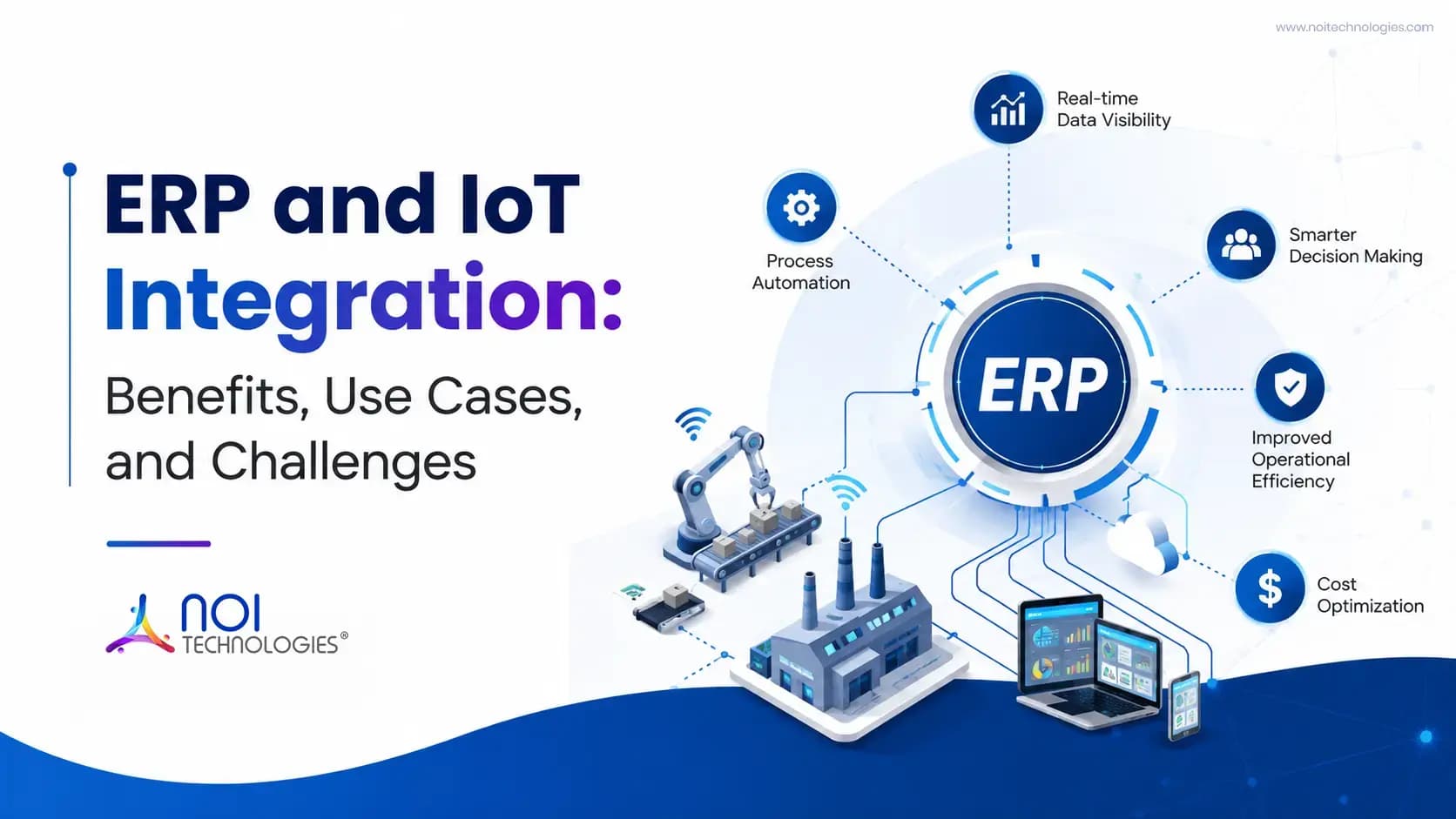
ERP and Internet of Things integration connects business software with real-time data from machines, sensors, vehicles, and connected devices. Instead of relying only on manual updates, businesses can use IoT data inside ERP workflows to improve visibility, automate reporting, monitor assets, and make faster operational decisions.
This integration is especially useful for manufacturers, warehouses, logistics companies, and supply chain-driven businesses where real-time data can improve planning, inventory control, maintenance, and productivity.
For a deeper explanation of how connected devices, real-time data, and automation work inside ERP platforms, read our detailed guide on IoT in ERP systems.
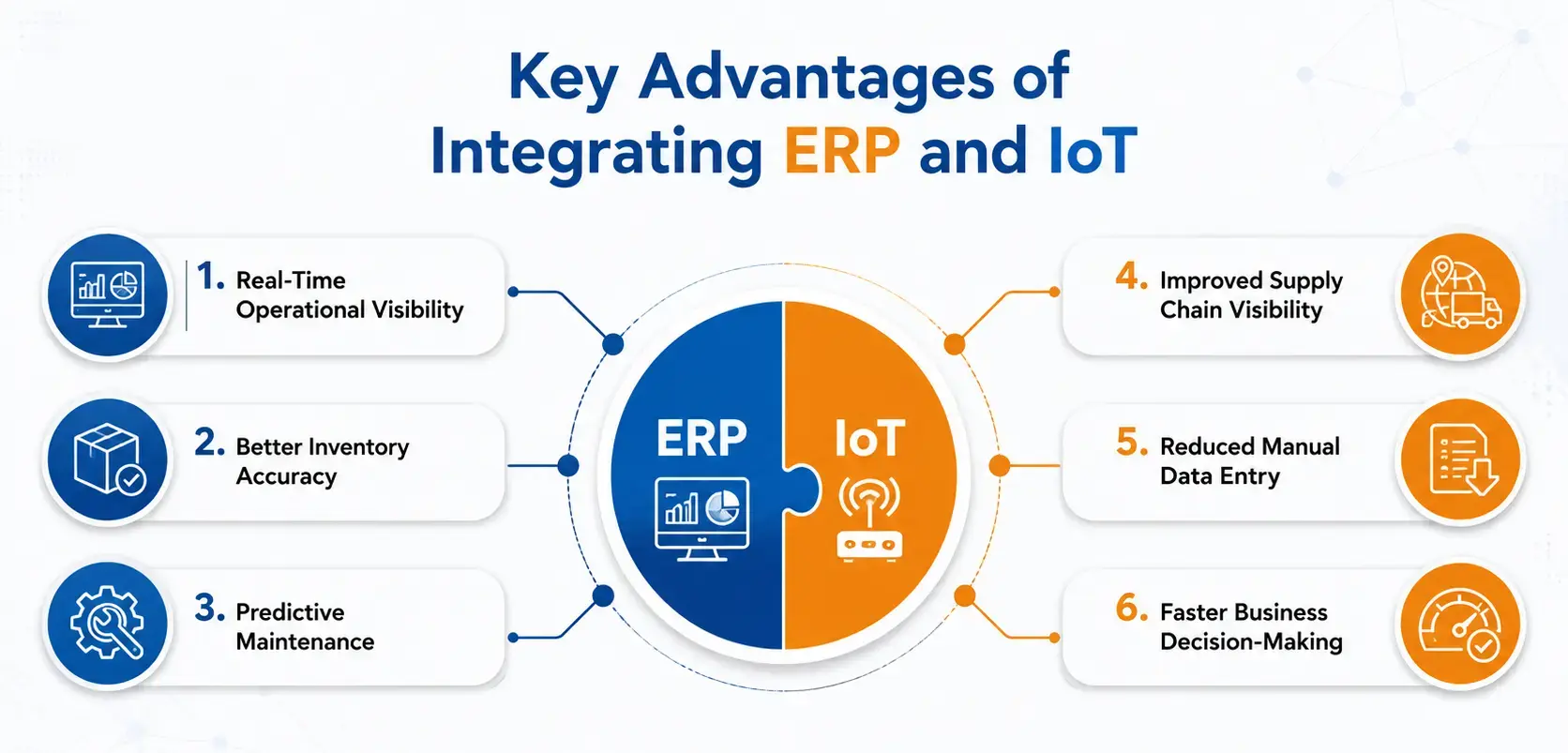
Key Advantages of Integrating ERP and IoT
Real-Time Operational Visibility
IoT devices can send live data from machines, vehicles, sensors, and equipment into ERP systems. This helps teams monitor operations as they happen instead of waiting for manual reports or delayed updates.
Better Inventory Accuracy
When IoT devices track stock movement, storage conditions, and item locations, ERP systems can maintain more accurate inventory records. This helps reduce stock mismatches, manual counting errors, and delays in order planning.
Predictive Maintenance
IoT sensors can monitor equipment conditions such as temperature, vibration, usage hours, and performance changes. When this data is connected to ERP workflows, maintenance teams can schedule repairs before breakdowns affect production.
Improved Supply Chain Visibility
IoT-enabled tracking can help businesses monitor shipments, warehouse activity, fleet movement, and delivery conditions. ERP systems can use this data to improve planning, reduce delays, and support better coordination across the supply chain.
Reduced Manual Data Entry
Instead of entering machine readings, inventory updates, or shipment details manually, IoT devices can send operational data directly into ERP systems. This reduces errors and gives teams more reliable information for daily decisions.
Faster Business Decision-Making
ERP and IoT integration gives managers access to current operational data instead of outdated reports. This helps businesses respond faster to equipment issues, inventory shortages, production delays, and supply chain disruptions.
IoT devices can collect data from connected machines, sensors, vehicles, and equipment, then send that information to ERP systems for tracking, reporting, automation, and decision-making.
Example: ERP and IoT in Manufacturing
In a manufacturing business, IoT sensors can monitor machine performance, production output, temperature, and downtime. When this data connects with ERP software, the system can update production records, trigger maintenance tasks, and help managers plan resources more accurately.
ERP and IoT Integration Challenges
- Connecting older ERP systems with modern IoT devices
- Managing large volumes of real-time data
- Keeping device and ERP data secure
- Maintaining clean and accurate data flows
- Training teams to use connected workflows
Where ERP and IoT Integration Creates the Most Value
ERP and IoT integration is most useful in operations where physical activity needs to be tracked digitally. This includes production monitoring, equipment maintenance, warehouse inventory tracking, fleet visibility, asset management, and quality control.
For example, a warehouse can use connected scanners, sensors, and tracking devices to update inventory records inside the ERP system. A manufacturer can use machine sensor data to monitor production output, downtime, and maintenance needs.
Conclusion
ERP and IoT integration helps businesses connect physical operations with digital workflows. By sending real-time data from devices, machines, and sensors into ERP systems, companies can improve visibility, reduce manual work, strengthen inventory control, and make better operational decisions.
For businesses using open-source ERP platforms or custom ERP systems, IoT integration should be planned around clear use cases such as equipment monitoring, warehouse tracking, production visibility, or supply chain automation.
NOI Technologies helps businesses plan integrations between ERP systems and operational tools, including the data flows and workflows those connections need to support. Learn more about our custom ERP development work.
Talk to our ERP integration team
FAQs About ERP and IoT Integration
How does IoT work with ERP?
IoT devices collect data from physical assets such as machines, vehicles, sensors, and inventory systems. ERP software receives this data and uses it for reporting, planning, maintenance, inventory control, and decision-making.
What are the main benefits of ERP and IoT integration?
The main benefits include real-time visibility, better inventory accuracy, predictive maintenance, reduced manual data entry, improved supply chain tracking, and faster decision-making.
Which industries use ERP and IoT integration?
Manufacturing, logistics, warehousing, retail, healthcare, and supply chain businesses commonly use ERP and IoT integration to monitor assets, automate workflows, and improve operational visibility.
Is ERP and IoT integration useful for small businesses?
It can be useful if the business manages equipment, inventory, production, or logistics data that needs real-time tracking. However, small businesses should start with specific use cases instead of trying to connect every process at once.
What are the risks of integrating IoT with ERP?
The main risks include poor data quality, cybersecurity gaps, device compatibility issues, integration complexity, and high implementation costs if the project is not planned properly.