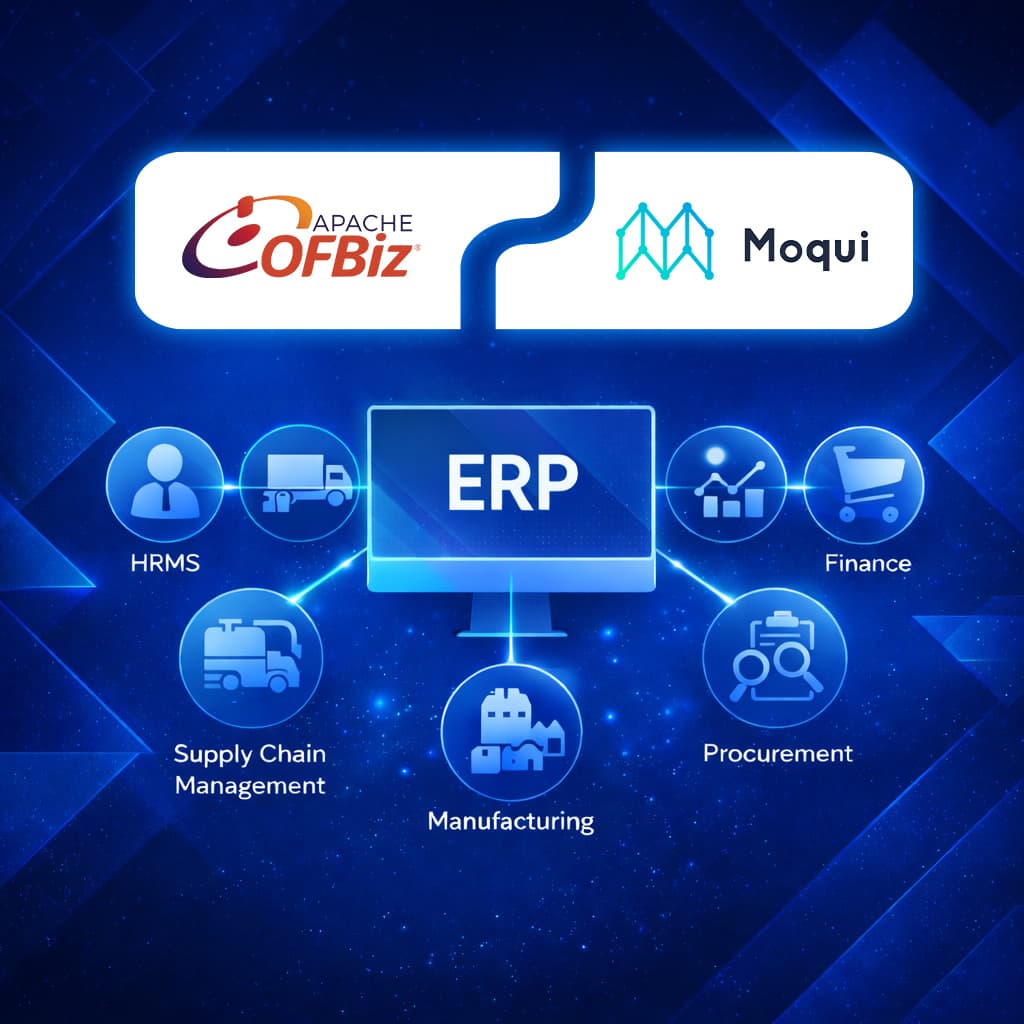
Custom ERP development services shown through a digital ERP system dashboard with real-time analytics, cloud integration, and automation icons

Custom ERP

Custom ERP
Development Services

Design, build, and modernize ERP systems around your business workflows, integrations, operational requirements, and long-term growth.

10+ Years in ERP  |  100+ ERP & Enterprise Software Projects  |  Apache OFBiz + Moqui Expertise  |  ISO 9001  |  ISO 27001

ERP Software Built Around Complex Business Workflows

NOI Technologies builds and modernizes ERP applications for organizations whose workflows are difficult to manage with standard software. We develop the modules, business rules, integrations, and reporting needed to connect operations across teams and systems.

A project may involve extending an existing ERP or building on a suitable open-source framework. We define the scope around your current systems, users, and operational requirements before development begins.

Discuss Your ERP Requirements


Trusted by Businesses Worldwide
Ads2Publish
CMS IT Solutions
FNP
Fulfillment Plus NY
Hiretale
Konekt
Nogin
Spre Tyres
Vinci School
TAPPP
MPStyle
Landmark

Custom ERP Development Capabilities

Custom ERP Modules

Custom ERP Modules

Finance, inventory, procurement, order management, warehouse operations, billing, manufacturing workflows, and reporting.
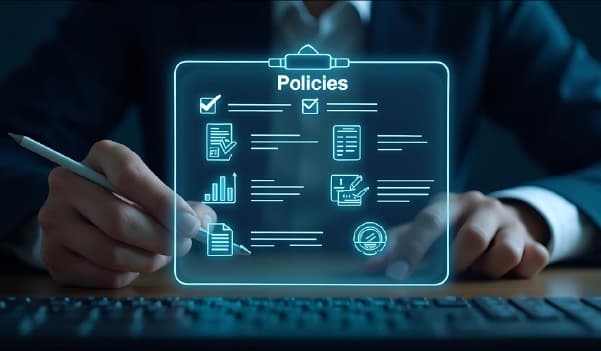
Business rules and approval workflow checklist displayed on a digital tablet interface

ERP Customization

Business rules, approval flows, workflows, user roles, dashboards, and reports.

Legacy ERP Modernization

Legacy ERP Modernization

Extend or restructure aging ERP systems without necessarily replacing everything.

System Integrations

System Integrations

Connect ecommerce, warehouse, accounting, logistics, payment, supplier, and other operational systems.

Analyst reviewing real-time ERP data dashboards with bar, pie, and trend charts

Data Migration

Move data from legacy ERPs, spreadsheets, databases, or disconnected operational systems.
Workflow Automation

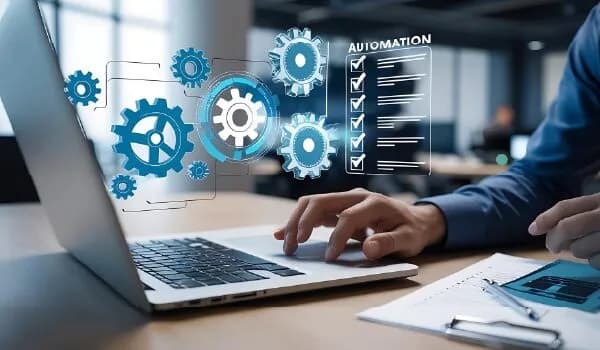
Workflow Automation

Approvals, reconciliation, document handling, exception management, and notifications.

Our Development Process

Our Custom ERP Development Process

We follow a structured, phased approach from initial discovery through deployment, so priorities, dependencies, and rollout timing stay clear throughout the engagement.

01

Define the Build Scope

Document the workflows, users, business rules, data, and integrations the ERP must support.

02

Design the System

Choose how modules, permissions, data, and connected applications will work together.

03

Plan Delivery Phases

Prioritize the modules and integrations, identify dependencies, and agree on a practical release sequence.

04

Development and Integration

Build the modules, workflows, reports, and APIs defined in scope, and connect the system to ecommerce, CRM, accounting, and other platforms your business already runs on.

05

Testing and Data Migration

Run functional, integration, and regression testing alongside user acceptance testing, then validate and migrate production data with a defined cutover plan.

06

Deployment and Release

Release in planned phases, monitor production behavior, resolve issues quickly, and continue building new capabilities as requirements evolve.

AI-Native Custom ERP Systems

We design ERP systems with practical AI features for automation, forecasting, document processing, and decision support. Each component is planned around your workflows, data, and operational goals.

AI-Ready ERP Architecture

Plan ERP systems with structured data, connected modules, and automation paths that support future AI features.

Embedded AI Agents for Operations

Use AI agents to support routine ERP tasks such as approvals, reconciliation, workflow checks, and exception handling.

Intelligent Document Processing

Extract and organize data from invoices, contracts, purchase orders, and other business documents to reduce manual entry.

Predictive ERP Insights

Use forecasting and pattern analysis to support demand planning, inventory decisions, and operational reporting.

Custom Enterprise Development

Custom Enterprise Development in Practice: TAPPP

TAPPP needed a system for managing master data and application configuration across its operations. NOI Technologies developed a custom Moqui-based hub designed around those requirements.

The project shows how custom enterprise development can address a defined operational need: bringing data governance and configuration into a central system that teams can manage as their applications evolve. It is an example of NOI building around a client’s workflows, rather than presenting a standard ERP module as the solution.

Discuss Your Custom ERP Requirements

Industries We Build Custom ERP For

Custom ERP for Logistics & Supply Chain Management solutions

Custom ERP for Logistics & Supply Chain Management

Streamline logistics and supply chain operations with an ERP solution that connects warehouse management, transportation, procurement, shipment tracking, and inventory into a single platform for end-to-end operational visibility.

  • Warehouse, inventory, and order management
  • Shipment tracking and transportation planning
  • Procurement, supplier, and distribution management

Choosing the Foundation for Your Custom ERP

A custom ERP project may extend an existing system or use a framework such as Apache OFBiz or Moqui. The right approach depends on your workflows, current software, integrations, and long-term maintenance requirements.

NOI Technologies evaluates those requirements before deciding what can be reused and what needs custom development. Explore our Apache OFBiz and Moqui services for platform-specific work.

  • Moqui Framework provides a modern, modular architecture for ERP customization, API integration, and enterprise application development.
  • Apache OFBiz offers proven ERP capabilities with built-in support for finance, manufacturing, inventory, procurement, CRM, and order management.
  • Either framework supports long-term flexibility through open-source technology and extensive customization options.
Frequently asked questions illustration

Custom ERP Solutions FAQs

A custom ERP software solution is an enterprise resource planning system designed and built around the specific workflows, data models, and operational requirements of your business. Unlike packaged ERP software, it doesn’t require you to adapt your processes to fit a vendor’s template. It’s built from the ground up (or on top of an open-source framework like Apache OFBiz or Moqui) to align with how your organization actually operates, integrate with the tools you already use, and scale as your business grows.

Packaged ERP solutions are built for the broadest possible market, which often means paying for modules you don’t need, adapting your processes to the software’s logic, and accepting limits on customization. Custom ERP lets you build only what you need, integrate directly with your existing systems, and retain full control over your data and architecture. Whether custom ERP is the better investment depends on the cost of development, integrations, maintenance, and the workarounds required by packaged software.

NOI specializes in open-source custom ERP development using Apache OFBiz and Moqui Framework, two enterprise-grade platforms with over a decade of production use. This gives our clients modular architecture, deep customization capability, and no proprietary per-user licensing fees for the underlying open-source framework. Our team brings more than 10 years of implementation experience across manufacturing, logistics, and ecommerce, which means we understand the operational edge cases that generic development teams miss. We also design AI into the architecture from the start, not as an afterthought.

Timelines depend on scope: the number of modules, data migration needs, and integration complexity. A focused single-module implementation such as inventory or procurement can be completed in 3–6 months. Full enterprise ERP deployments covering multiple business functions typically run 6–18 months, delivered in phases so your team gains access to working software early and can provide feedback throughout the build.

Cost is driven by scope: the number of modules, third-party integrations, complexity of workflows, and whether data migration is required. Projects built on open-source frameworks like Apache OFBiz or Moqui can reduce licensing-related costs and provide greater control over long-term customization, although total cost still depends on implementation scope, hosting, integrations, support, and ongoing development. We provide a detailed project estimate after reviewing your workflows, team size, and integration requirements.

An existing framework can provide useful ERP components, while development from scratch may suit requirements that do not fit those foundations. We compare the available options against your workflows, integration needs, ownership requirements, and long-term maintenance capacity.

Decorative circle border
Decorative ring accent
NOI Technologies contact support illustration
Decorative cone accent
Talk to Us

Tell Us About Your ERP Requirements

Decorative arrow accent