AI Implementation Services
AI Implementation Services for ERP, WMS, and Business Operations
Add AI to the ERP and warehouse systems you already run, without replacing them.

Connect AI to the Systems and Workflows Your Teams Already Use
NOI Technologies designs and implements AI within ERP, WMS, and operational systems so teams can retrieve business data faster, automate repetitive decisions, identify exceptions, and improve planning without replacing their core software.
We connect AI to systems you already use, including Apache OFBiz, Moqui, custom ERP applications, warehouse systems, databases, and APIs. We scope access to the data each workflow needs and apply the relevant user permissions.
Practical AI Automation for ERP Workflows
AI delivers the most value when it is applied to a clearly defined operational problem. We focus on workflows where faster information retrieval, exception detection, forecasting, document processing, or automated routing can reduce repetitive work and support better decisions.
Our AI implementations are built around real ERP workflows, business rules, and operational data. For example, an AI agent can read incoming purchase requests, match them with inventory levels, check supplier rules, and create a draft approval workflow inside the ERP. In warehouse or manufacturing environments, AI can also flag unusual stock movements, delayed orders, or production bottlenecks before they affect fulfillment.
ERP Inventory Chatbots
Let users ask stock, order, SKU, supplier, and shipment questions using ERP data.
ERP ChatbotOrder Validation Agents
Check orders for missing data, inventory conflicts, pricing issues, or fulfillment risks before processing.
AI AgentsApproval Routing Automation
Route purchase orders, invoices, returns, or exceptions to the right people based on rules.
Workflow AutomationDemand Forecasting Models
Use historical sales, inventory movement, and seasonality to support better planning.
ForecastingWarehouse Exception Alerts
Flag delayed picks, stock mismatches, fulfillment bottlenecks, or unusual warehouse activity.
WMS & LogisticsERP Reporting Assistants
Generate summaries from ERP data for finance, operations, procurement, and leadership teams.
ReportingERP Platforms We Integrate AI With
AI is applied within the systems businesses already use. Instead of building separate tools, it integrates directly into ERP platforms, warehouse systems, and operational workflows where decisions are made daily.
 Apache OFBiz
Apache OFBiz
We implement AI inside Apache OFBiz ERP systems using its Entity Engine, Service Engine, and workflow modules. Common use cases include AI-powered order processing, inventory forecasting, warehouse operations, manufacturing planning, and operational reporting.
Explore Apache OFBiz → Moqui Framework
Moqui Framework
We integrate AI agents, forecasting models, workflow automation, and operational reporting into Moqui-based ERP systems. AI can be connected directly to inventory, fulfillment, manufacturing, customer service, and business process workflows.
Explore Moqui Framework →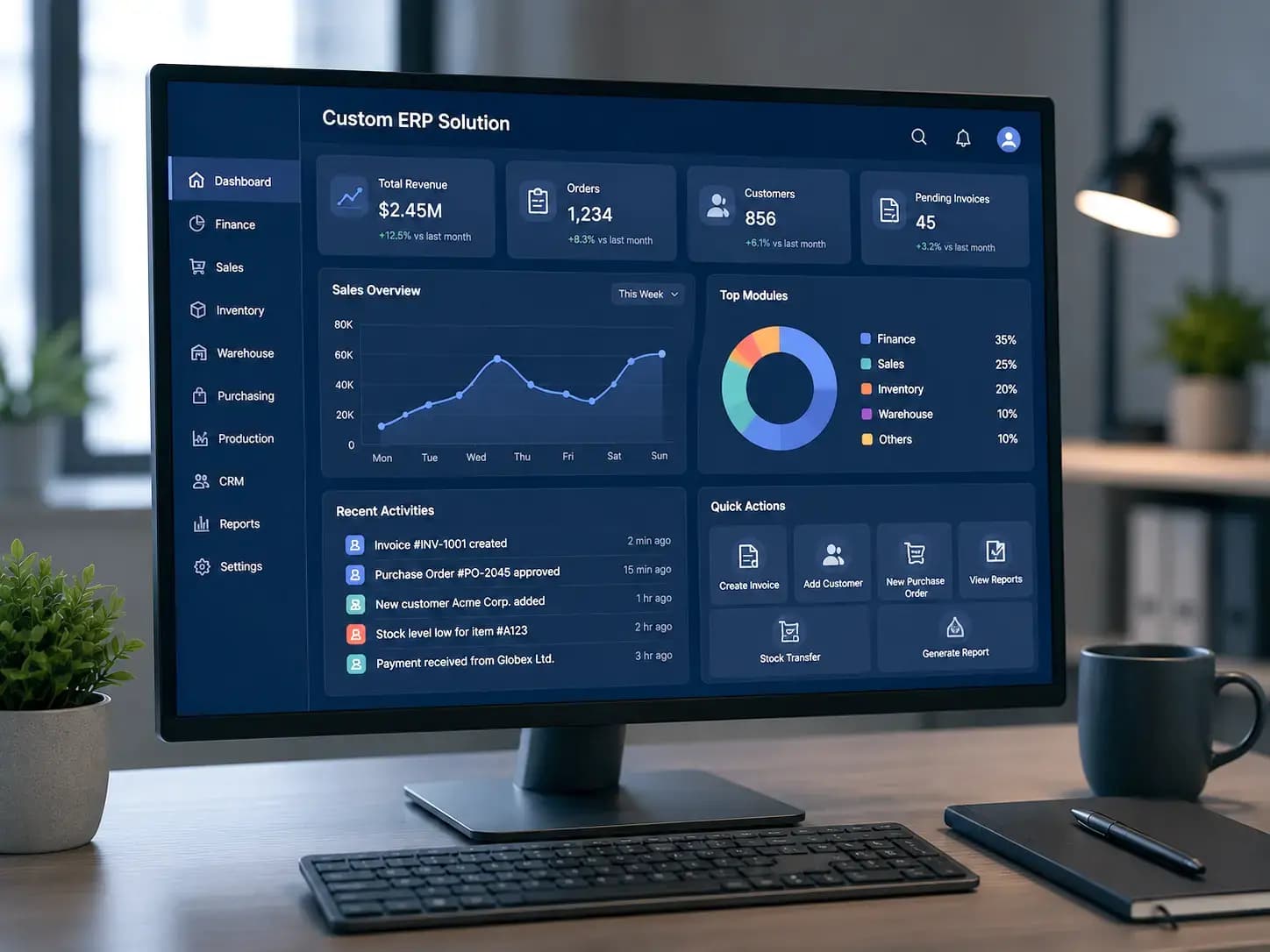 Custom ERP
Custom and Legacy ERP Systems
Connect AI to proprietary ERP applications, warehouse management systems, and operational databases using APIs, service layers, and existing business workflows.
Explore Custom ERP →Supported ERP Modules
Have an ERP Workflow You Want to Automate?
Share the process, data source, or operational bottleneck you are working with. We can help determine whether an AI agent, forecasting model, chatbot, or workflow automation is the right approach.
Our ERP AI Implementation Process
How We Implement AI Inside ERP Systems
We start by mapping the ERP modules, data fields, approval rules, and repetitive tasks where AI can support faster decisions or reduce manual review. This helps define which workflows need automation, which data sources must be connected, and where human approval should remain part of the process.
Operational Example
A forecasting model can recommend stock level changes based on live order trends, while an AI agent can route orders, flag fulfillment issues, and update ERP records automatically.
Audit ERP Data and Workflow Readiness
We review existing ERP modules, data quality, user roles, approval rules, integrations, and repetitive workflows to identify where AI can be safely and usefully applied.
Build, Secure, and Test the AI Workflow
We connect the required ERP data sources, define access controls, configure AI logic, and test the workflow in a staging environment before it reaches live operations.
Deploy, Train, and Monitor Performance
After deployment, we support user handoff, track accuracy, review exceptions, and monitor performance so the AI workflow continues to improve without disrupting daily ERP operations.
Data Security and Access Control
AI workflows should only access the ERP data required for their task. We define role-based permissions, data boundaries, approval rules, and activity logs before connecting AI to live ERP modules such as orders, inventory, supplier records, or finance.
Before deployment, each workflow is tested in a staging environment and reviewed for accuracy, exceptions, and user handoff. This helps teams adopt AI without weakening ERP governance, compliance, or operational control.
We'll also tell you exactly where your data goes. Depending on your needs, we can use commercial AI models through secure APIs, where your data isn't used for training, or open-source models hosted on your own servers so nothing leaves your environment. We'll recommend the right option during the audit.
Role-Based Access
AI only sees approved ERP data.
Data Boundaries
Sensitive modules stay restricted.
Staging Testing
Workflows are tested before launch.
Activity Logs
AI actions and exceptions are tracked.
Why Companies Choose NOI Technologies for ERP AI Implementation
NOI Technologies builds AI inside the ERP, WMS, warehouse, and production workflows teams already use. Our approach connects automation with real system data, user permissions, and business rules, so AI supports daily operations instead of staying limited to demos or disconnected dashboards.
From AI Pilot to Production
We move from focused AI pilots to working implementation by validating outputs, testing permissions, connecting operational data, and deploying automation into real ERP and WMS workflows.
ERP and WMS Implementation Experience
NOI brings 10+ years of ERP, WMS, and automation experience across manufacturing, 3PL, ecommerce, and distribution workflows. That background helps us connect AI to existing systems and operational processes.
Success Metrics Defined Before Build
Before implementation, we define clear success metrics such as fewer manual lookups, faster approval routing, lower reporting effort, better inventory accuracy, fewer order exceptions, or reduced production delays.
Security and Access Control Built In
NOI Technologies is ISO 27001 and ISO 9001 certified. We design AI workflows around user roles, data boundaries, approval rules, audit logs, and secure ERP access, so sensitive business data stays protected across teams and workflows.
Open-Source ERP Experience
We work with existing data models, services, and customizations when adding AI features to open-source ERP systems. This helps the new workflow fit the system your team already maintains.
Ready to Build AI Into Your ERP System?
Talk with NOI about AI agents, ERP chatbots, forecasting, and workflow automation inside your existing business systems.
AI Implementations in Production
Real examples of AI agents, ERP chatbots, and forecasting models deployed inside ERP, WMS, and operational systems.
 Warehouse Operations
Warehouse ERP Chatbot
See our WMS work →Warehouse ERP Chatbot
Industry
3PL / Warehousing
Platform
Custom ERP / WMS
Problem
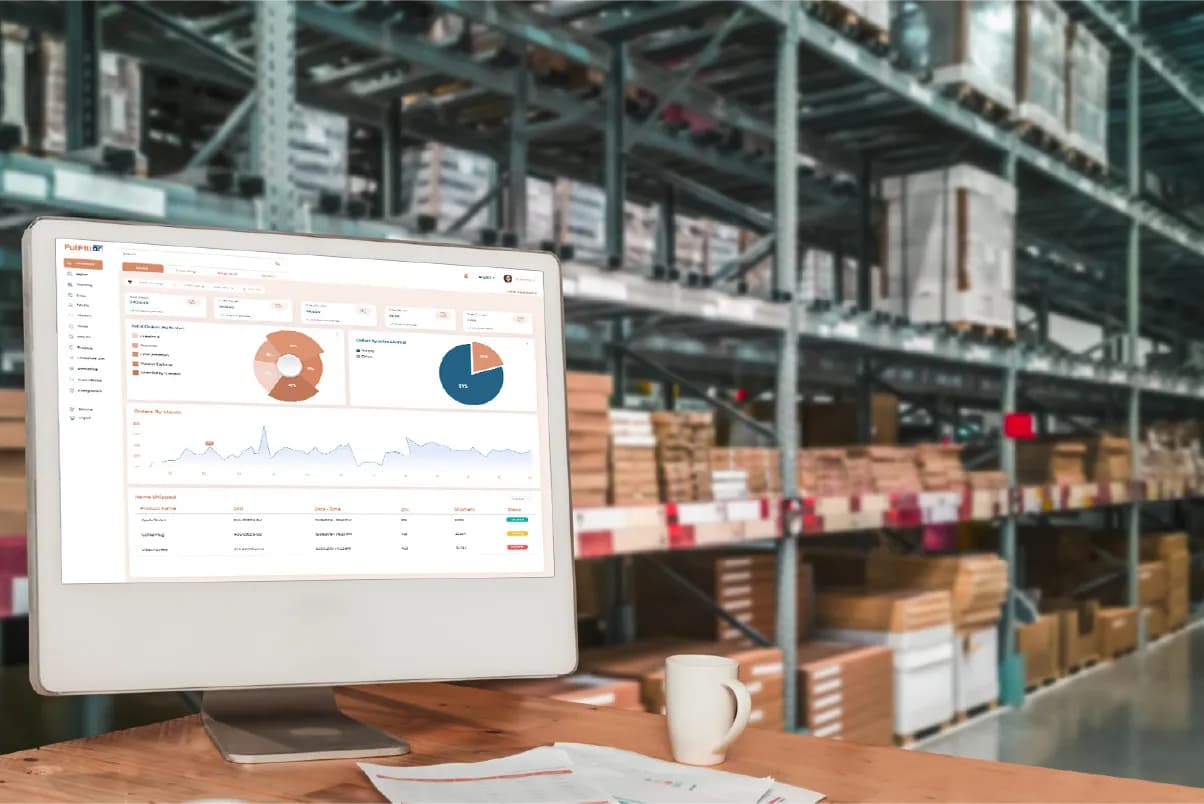
Warehouse staff were clicking through several screens just to answer simple questions like where an order stood or how many units were left.
What We Built
A chatbot inside the WMS that answers those questions in plain language, using live warehouse and order data.
Result
- →Faster internal lookups and fewer manual status checks.
 Manufacturing ERP
MPStyle Production Planning
Read the MPStyle case study →MPStyle Production Planning
Industry
Fashion Manufacturing
Platform
Apache OFBiz-based ERP
Problem
Production planning ran on spreadsheets, so delays showed up late and nobody could see the full picture.
What We Built
An Apache OFBiz ERP connecting planning, inventory, and purchasing, with AI-supported demand forecasting built into the planning process.
Result
- →Production plans that reflect forecasted demand, alongside connected inventory tracking and procurement coordination.
FAQs About AI Implementation for ERP Systems
Common questions about integrating AI with ERP systems, selecting models, and what to expect from a real implementation.
AI implementation for ERP systems means adding AI agents, chatbots, forecasting, or automation into existing ERP workflows such as inventory, procurement, finance, manufacturing, warehouse operations, and reporting.
AI can reduce manual checks, speed up approvals, summarize reports, flag stock issues, detect order delays, and help teams find ERP data faster without switching between multiple screens.
Yes. AI can be added to an existing ERP through APIs, database connections, workflow tools, or secure middleware. The right approach depends on the ERP platform, data quality, permissions, and business process.
The best first use case is usually a focused workflow with clear value, such as an ERP chatbot, purchase approval automation, inventory lookup, invoice extraction, reporting summaries, or warehouse exception alerts.
ERP data can be protected with role-based access, data boundaries, permission controls, staging tests, activity logs, and secure integrations. Users should only see the ERP data they are approved to access.
NOI Technologies can integrate AI with custom ERP systems, Apache OFBiz, Moqui Framework, WMS platforms, and other business systems based on API access, database structure, and workflow requirements.
A focused pilot can take a few weeks, while advanced AI workflows across multiple ERP modules may take longer. Timeline depends on data quality, integration complexity, permissions, testing, and approval rules.
No. In ERP systems, AI is best used to support users with alerts, summaries, recommendations, and draft actions while keeping important decisions and approvals under human control.
It depends on the task and your data rules. For chat and summaries, we typically use commercial AI models through secure enterprise APIs. When data can't leave your servers, we use open-source models hosted on your own infrastructure. Forecasting usually runs on classic machine learning models trained on your own sales and inventory history.
Only if you want it to. We set up exactly which data the AI can see, and we can keep everything inside your own infrastructure when needed. We'll walk you through the options before anything is connected.
A focused pilot, such as one chatbot or one approval workflow, costs less than a rollout across several ERP modules. The exact number depends on integrations and data cleanup. We'll give you a fixed estimate after the audit.




How May We Help You?