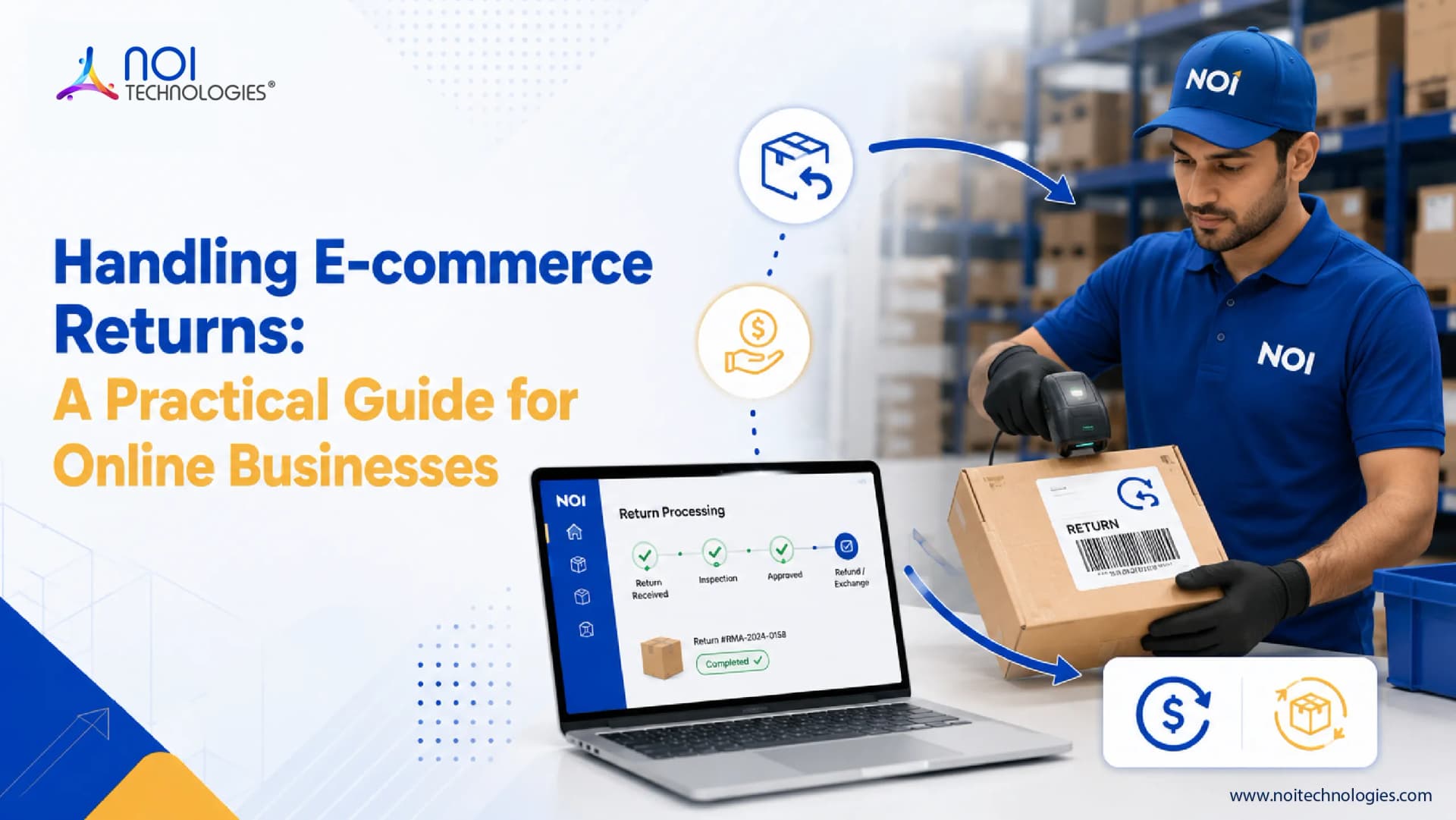
E-commerce returns are a normal part of online selling. Customers cannot physically inspect products before buying, so returns can happen because of size issues, damaged items, wrong products, inaccurate descriptions, quality concerns, or a simple change of mind.
For online businesses, returns are not only a customer service issue. They affect inventory accuracy, warehouse workflows, order fulfillment cost, refunds, exchanges, product quality, and customer trust.
A clear returns process helps businesses reduce confusion, process returned products faster, and identify the reasons behind frequent returns. This guide explains what e-commerce returns are, why customers return products, how the returns process works, and how businesses can manage returns more effectively.
What Are E-commerce Returns?
E-commerce returns are products purchased online and sent back to the seller after delivery. This may happen because the product does not match customer expectations, arrives damaged, has the wrong size or color, or is no longer needed by the customer.
Returns are more common in online shopping because customers make buying decisions based on product images, descriptions, reviews, size charts, and pricing instead of physically checking the item before purchase.
How the E-commerce Returns Process Works
A typical e-commerce returns process includes several steps. The exact flow may vary based on the return policy, product type, shipping method, and warehouse setup.
- Customer places a return request: The customer submits a return request through the website, marketplace, customer portal, or support team.
- Seller reviews the request: The seller checks whether the return meets the return policy conditions.
- Return pickup or drop-off is arranged: The product is collected from the customer or dropped off at an approved location.
- Product is shipped back: The returned item is sent back to the seller, warehouse, fulfillment center, or returns processing location.
- Returned product is received: The warehouse team receives the returned item and matches it with the original order or return authorization.
- Quality check is completed: The product is inspected for damage, usage, missing parts, packaging condition, and resale eligibility.
- Refund, exchange, or replacement is processed: Based on the inspection result and return policy, the seller completes the next step.
A structured returns process helps businesses avoid delays, reduce customer complaints, and make better decisions about restocking, repair, quarantine, or disposal.
Why Do Customers Return E-commerce Orders?
Understanding why customers return products helps businesses reduce avoidable returns and improve product listings, fulfillment accuracy, and customer experience.
Better Price Found Elsewhere
Some customers return a product after finding the same or similar item at a lower price. This can happen when pricing changes quickly across marketplaces, competitor websites, or promotional campaigns.
Change of Mind
Customers may return a product because they no longer need it, changed their preference, ordered by mistake, or decided the product was not suitable after delivery.
Damaged Product
Damage during storage, packing, shipping, or delivery can lead to return requests. This is common when packaging is weak, handling is poor, or fragile products are not protected properly.
Inaccurate Product Description or Images
If the product does not match the online description, images, color, size, material, or specifications, customers are more likely to return it.
This often happens when product pages are incomplete, outdated, misleading, or not detailed enough.
Quality Issues
Customers may return products when the quality does not match expectations. This may include poor material, weak finishing, defects, missing parts, or a product that feels different from what was shown online.
Size and Fit Problems
Size and fit issues are common in apparel, footwear, accessories, and lifestyle products. Returns can increase when size charts are unclear, product measurements are missing, or sizing differs between brands.
Wrong Item Shipped
Wrong-item returns usually happen because of picking errors, packing mistakes, inventory mismatches, incorrect product labeling, or order fulfillment issues.
Improving product data, warehouse processes, and order fulfillment accuracy can help reduce returns caused by operational errors.
How to Manage E-commerce Returns Effectively

A good returns process should be clear for customers and manageable for internal teams. It should define what can be returned, how returns are requested, who pays for shipping, how products are inspected, and when refunds or exchanges are completed.
1. Create a Clear Returns Policy
A returns policy should explain the return window, eligible products, product condition requirements, refund rules, exchange options, shipping costs, and exceptions.
Clear policies reduce confusion and help customer support teams handle return requests more consistently.
2. Make Return Requests Easy for Customers
Customers should be able to request a return without going through unnecessary steps. A return portal, order page, or simple support workflow can make the process easier.
The return request should collect important information such as order number, item details, return reason, images if needed, and preferred resolution.
3. Offer Practical Return Options
Businesses can provide different return options depending on their model. These may include carrier pickup, customer drop-off, in-store returns, exchange requests, or return labels.
The goal is not to make returns too easy at the cost of margin. The goal is to make the process controlled, trackable, and clear.
4. Automate the Returns Workflow
Manual returns management can create delays, missed updates, refund errors, and inventory inaccuracies.
Automation can help businesses approve eligible returns, generate return labels, update return status, notify customers, assign quality checks, and update inventory after inspection.
For businesses managing higher order volumes, a connected returns management system can help control reverse logistics, inspection, restocking, quarantine, and refund workflows.
5. Analyze Return Reasons
Return data can show why customers are sending products back. Businesses should track common return reasons by product, category, supplier, warehouse, sales channel, and customer segment.
This helps identify problems such as inaccurate product pages, poor packaging, quality defects, frequent wrong-item shipments, or sizing issues.
6. Communicate Clearly During the Return Process
Customers should know when their return request is accepted, when the product is received, when inspection is complete, and when the refund or exchange is processed.
Clear return communication reduces support tickets and improves trust, especially when refunds take time.
Best Practices for Handling E-commerce Returns
Businesses can reduce avoidable returns by improving product information, warehouse accuracy, customer communication, and returns analysis.
Use AI and Analytics to Identify Return Patterns
AI and analytics can help businesses identify frequent return reasons, high-return products, seasonal return patterns, supplier issues, and customer behavior trends.
This can help teams improve product pages, packaging, inventory planning, and fulfillment quality.
Improve Product Images and Descriptions
High-quality images, accurate descriptions, detailed specifications, size charts, material details, and usage instructions help customers make better purchase decisions.
When product information is clear, customers are less likely to return items because of mismatched expectations.
Use Better Sizing and Product Guidance
For apparel, footwear, furniture, and similar categories, businesses can reduce returns by improving size charts, fit guides, measurement details, comparison images, and customer review prompts.
For some products, virtual try-on tools or 3D product visuals can also help customers understand the product before ordering.
Set Return Rules by Product Type
Not every product should have the same return policy. Clothing, electronics, food products, cosmetics, customized items, and fragile goods may need different return conditions.
Product-specific return rules help businesses protect margins while still giving customers a fair return process.
Ask Customers for Return Reasons
Return reason data is valuable. Businesses should ask customers why they are returning the product and use that information to improve product listings, quality control, packaging, and fulfillment workflows.
Inspect Returns Before Restocking
Returned products should not automatically go back into available inventory. Teams should inspect each return for damage, missing parts, packaging condition, and resale eligibility.
This helps prevent damaged or incomplete products from being shipped to another customer.
Need Better E-commerce Returns Management?
NOI Technologies helps businesses plan and build systems for returns, order management, inventory visibility, and warehouse workflows.
Conclusion
Handling e-commerce returns requires a clear process, accurate product information, strong fulfillment controls, and regular return data analysis.
Returns cannot always be avoided, but businesses can reduce preventable returns by improving product pages, order accuracy, packaging, warehouse workflows, and customer communication.
For ecommerce brands, retailers, and fulfillment operations, better returns management can protect margins, improve inventory control, and create a more reliable post-purchase experience.
Connect with NOI Technologies to discuss custom solutions for ecommerce returns, warehouse workflows, order management, and business process automation.