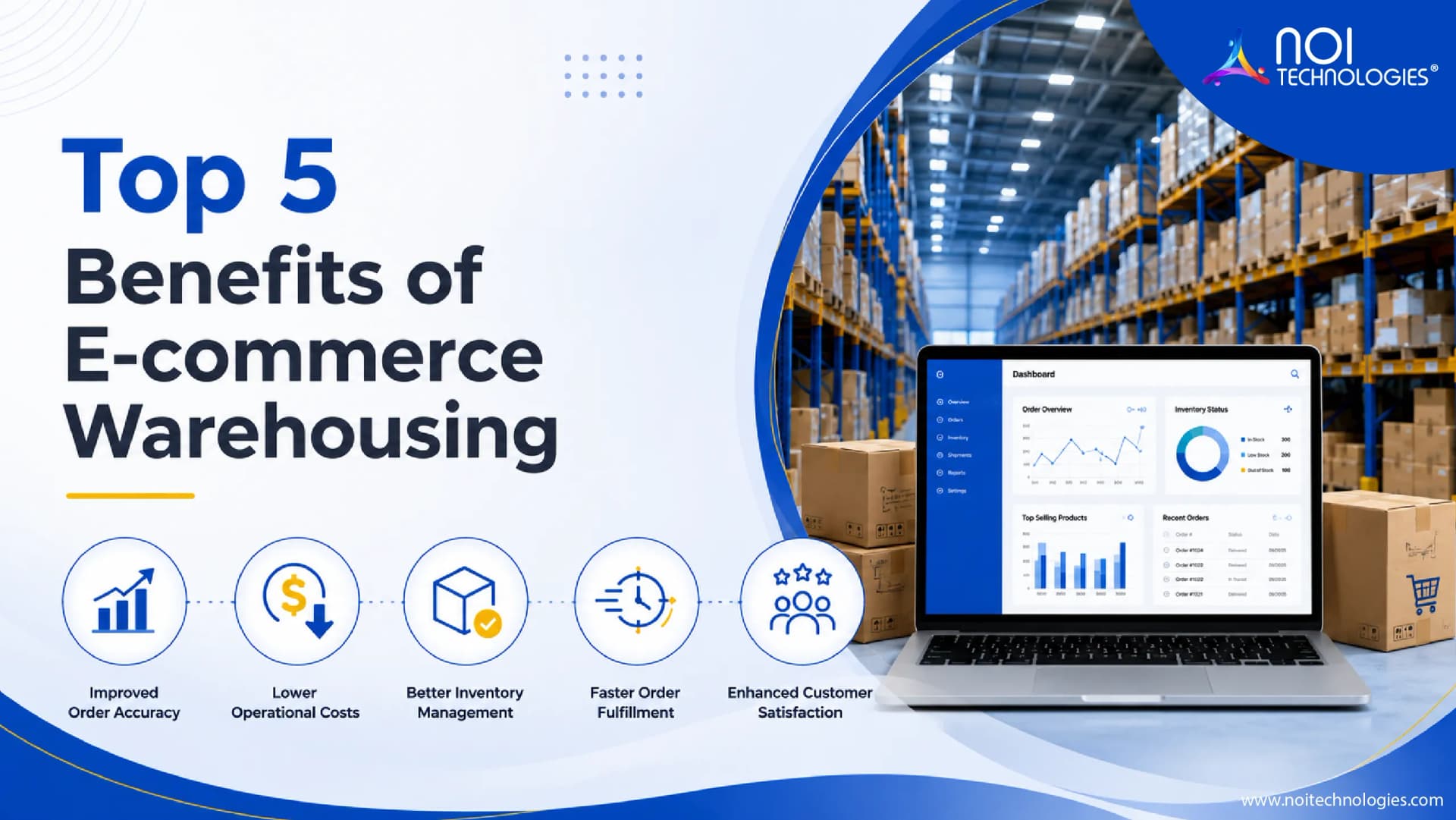
E-commerce has changed how customers buy products. Instead of visiting a physical store, customers now expect to place orders online and receive them quickly, accurately, and with clear delivery updates.
Behind that experience is a warehouse operation that must receive stock, store products, manage inventory, pick and pack orders, print labels, handle returns, and keep product data accurate across sales channels.
E-commerce warehousing helps online businesses manage these processes in a more organized way. Whether a business sells through its own website, marketplaces, social commerce, or multiple online channels, the right warehousing setup can improve order accuracy, delivery speed, cost control, and customer satisfaction.
This article explains five key benefits of e-commerce warehousing and why it matters for growing online businesses.
What Is E-commerce Warehousing?

E-commerce warehousing is the process of storing, managing, picking, packing, and shipping products for online orders. It connects inventory storage with order fulfillment so businesses can deliver products to customers accurately and on time.
A strong e-commerce warehouse setup usually includes inventory tracking, barcode scanning, order management, shipping integrations, returns handling, and warehouse software that keeps product movement visible from receiving to dispatch.
For online sellers, e-commerce warehousing is not only about storage. It directly affects customer experience, fulfillment cost, stock accuracy, and the ability to scale during busy sales periods.
1. Streamlined Order Fulfillment Operations
E-commerce warehousing helps businesses organize the full order fulfillment process, from receiving stock to shipping the final order. Instead of relying on disconnected spreadsheets, manual updates, or scattered tools, businesses can use warehouse systems to manage orders, inventory, and packing workflows in one place.
Automation plays an important role here. It can help assign orders to the right picking process, update stock after each sale, generate shipping labels, and reduce repetitive manual tasks.
For example, an ecommerce business can connect its warehouse system with online stores, marketplaces, and shipping carriers. When an order is placed, the system can route it to the warehouse team, reserve the stock, support picking, and update tracking once the order ships.
This improves speed and reduces avoidable errors in the fulfillment process.
- Faster order processing: Orders can move from sales channels to warehouse teams with fewer manual steps.
- Better inventory visibility: Stock levels can update as products are received, picked, packed, shipped, or returned.
- More accurate fulfillment: Barcode scanning and system validation help reduce wrong-item and wrong-quantity shipments.
- Improved warehouse coordination: Teams can follow clearer workflows for picking, packing, labeling, and dispatch.
For businesses that want to reduce manual fulfillment issues, systems like warehouse management software and inventory management tools can help bring more control to daily operations.
2. Better Cost Control in Warehousing and Fulfillment
E-commerce warehousing can help businesses control fulfillment costs by improving how inventory, labor, storage, and shipping workflows are managed.
Manual warehouse processes often lead to extra costs. These can include misplaced stock, overstocking, stockouts, duplicate work, slow picking, unnecessary handling, and higher shipping errors. A more organized warehouse operation helps reduce these problems.
With better inventory tracking, businesses can avoid holding too much stock or running out of fast-moving products. With better order workflows, warehouse teams can process more orders without adding unnecessary labor. With better storage planning, products can be placed in locations that make picking faster and easier.
- Reduced inventory waste: Accurate stock data helps prevent overstocking, stockouts, and dead inventory.
- More efficient labor use: Clear picking and packing workflows reduce time spent searching for products.
- Better space utilization: Organized storage makes it easier to use warehouse space effectively.
- Fewer fulfillment mistakes: Reducing errors can lower reshipping, return, and customer support costs.
Cost control is especially important for ecommerce businesses with thin margins, seasonal sales peaks, or high order volumes.
3. Improved Customer Experience
Customer experience in ecommerce depends heavily on fulfillment. Customers expect the right product, accurate tracking, safe packaging, and delivery within the promised timeframe.
E-commerce warehousing supports this by making order handling more accurate and predictable. When inventory data is correct and warehouse workflows are clear, customers are less likely to face canceled orders, delayed shipments, or incorrect deliveries.
Fast and accurate fulfillment can also improve repeat purchases. If customers receive the right order on time, they are more likely to trust the brand again.
- More accurate orders: Better warehouse controls help ensure customers receive the correct items.
- Faster delivery preparation: Organized picking and packing reduces the time between order placement and shipment.
- Better tracking updates: Connected systems can send shipping and delivery information to customers more reliably.
- Fewer complaints and returns: Accurate fulfillment reduces issues that create poor customer experiences.
For growing ecommerce brands, warehouse performance is directly connected to customer satisfaction and brand reputation.
4. Easier Scalability During Growth and Seasonal Demand
E-commerce demand can change quickly. A business may see order spikes during promotions, holidays, product launches, marketplace campaigns, or seasonal buying periods.
A scalable e-commerce warehousing setup helps businesses handle these changes without losing control of orders or inventory. This includes having the right storage layout, picking process, inventory system, shipping workflow, and team structure.
During peak periods, a scalable warehouse process can help teams manage higher order volumes without major delays. It also helps businesses avoid common problems such as overselling, missed shipments, and packing errors.
- Support for higher order volumes: Better systems and workflows help warehouses process more orders during busy periods.
- Multi-channel order handling: Businesses can manage orders from websites, marketplaces, and other sales channels in one flow.
- Flexible storage planning: Warehouse space can be adjusted based on product demand and sales cycles.
- Improved operational visibility: Managers can track inventory, order status, and fulfillment performance more clearly.
Scalability is one of the main reasons ecommerce businesses invest in better warehousing before growth becomes difficult to manage.
5. Stronger Technology Integration Across E-commerce Operations
E-commerce warehousing works best when it is connected with the systems a business already uses. This may include ecommerce platforms, marketplaces, shipping carriers, ERP systems, accounting software, customer service tools, and reporting dashboards.
Technology integration helps reduce duplicate data entry and keeps teams working from more accurate information. For example, when a warehouse system connects with an ecommerce store, inventory updates can flow back to the sales channel after each order is shipped or returned.
This improves coordination between sales, warehouse, finance, and customer support teams.
- Ecommerce platform integration: Orders can flow from online stores into warehouse workflows.
- Marketplace integration: Sellers can manage orders from multiple marketplaces with better inventory control.
- Shipping carrier integration: Teams can generate labels, update tracking, and compare shipping workflows more efficiently.
- ERP and finance integration: Inventory, order, and billing data can stay better aligned across business systems.
For ecommerce businesses, connected technology reduces manual work and gives teams better visibility into operations.
Conclusion
E-commerce warehousing plays a major role in how online businesses manage inventory, fulfill orders, control costs, and deliver a better customer experience.
As order volumes grow, manual processes become harder to manage. A structured warehousing setup helps businesses improve fulfillment speed, reduce errors, manage stock more accurately, and scale during busy periods.
For ecommerce brands, retailers, and fulfillment operations, better warehousing is not only an operational improvement. It is part of building a more reliable online business.
For more insights on ecommerce, warehousing, ERP, and business technology, visit the NOI Technologies Blog.