Logistics companies coordinate customers, orders, carriers, warehouses, suppliers, invoices, service agreements, and financial records across several operational systems. As the business grows, disconnected applications and spreadsheets can make it difficult to understand costs, track commitments, or maintain consistent data across departments.
An open-source ERP platform can provide a shared foundation for managing these business processes. It gives development teams access to the source code, allowing the system to be adapted around specific logistics workflows, integrations, billing models, and reporting requirements.
However, an ERP system does not automatically replace every warehouse, transportation, or fleet management application. The right approach is to determine which processes should be managed inside the ERP and which specialized systems should exchange data with it.
This guide explains what logistics companies should expect from an open-source ERP platform, where customization may be valuable, and what to evaluate before implementation.
What Is an Open-Source ERP for Logistics?
An open-source ERP for logistics is an enterprise resource planning platform that can be configured or extended to manage the commercial, financial, administrative, and operational processes behind logistics services.
Depending on the implementation, the ERP may support:
- Customer and contract management
- Order administration
- Procurement and supplier records
- Inventory and warehouse data
- Transportation and carrier integrations
- Service billing and invoicing
- Accounting and financial reporting
- Workflow approvals
- Operational dashboards
Open-source platforms make their code available under a defined license. This gives businesses greater control over customization, hosting, integrations, and long-term system development.
Open-source software still requires investment. Implementation costs may include requirements analysis, development, hosting, migration, testing, training, security, maintenance, and technical support.
How ERP Fits into a Logistics Technology Stack
ERP software is only one part of a logistics technology environment. A company may also use a warehouse management system, transportation management system, fleet application, ecommerce platform, customer portal, shipping software, or carrier-specific tools.
| System | Primary Responsibility |
|---|---|
| ERP | Finance, customer records, procurement, contracts, billing, reporting, and cross-department workflows |
| WMS | Receiving, storage, inventory movements, picking, packing, replenishment, and warehouse execution |
| TMS | Carrier selection, route planning, shipment tendering, freight rating, tracking, and transportation settlement |
| Fleet management system | Vehicle location, maintenance, fuel consumption, driver activity, and fleet utilization |
A logistics ERP implementation should define how these systems will work together. For example, a warehouse application may execute picking and packing while sending inventory, order, and billing events to the ERP.
Similarly, a transportation platform may manage routing and carrier activity while the ERP maintains customer agreements, shipment charges, invoices, and financial records.
Trying to force every logistics function into one application can create unnecessary complexity. The objective should be consistent data and controlled workflows, not software consolidation for its own sake.
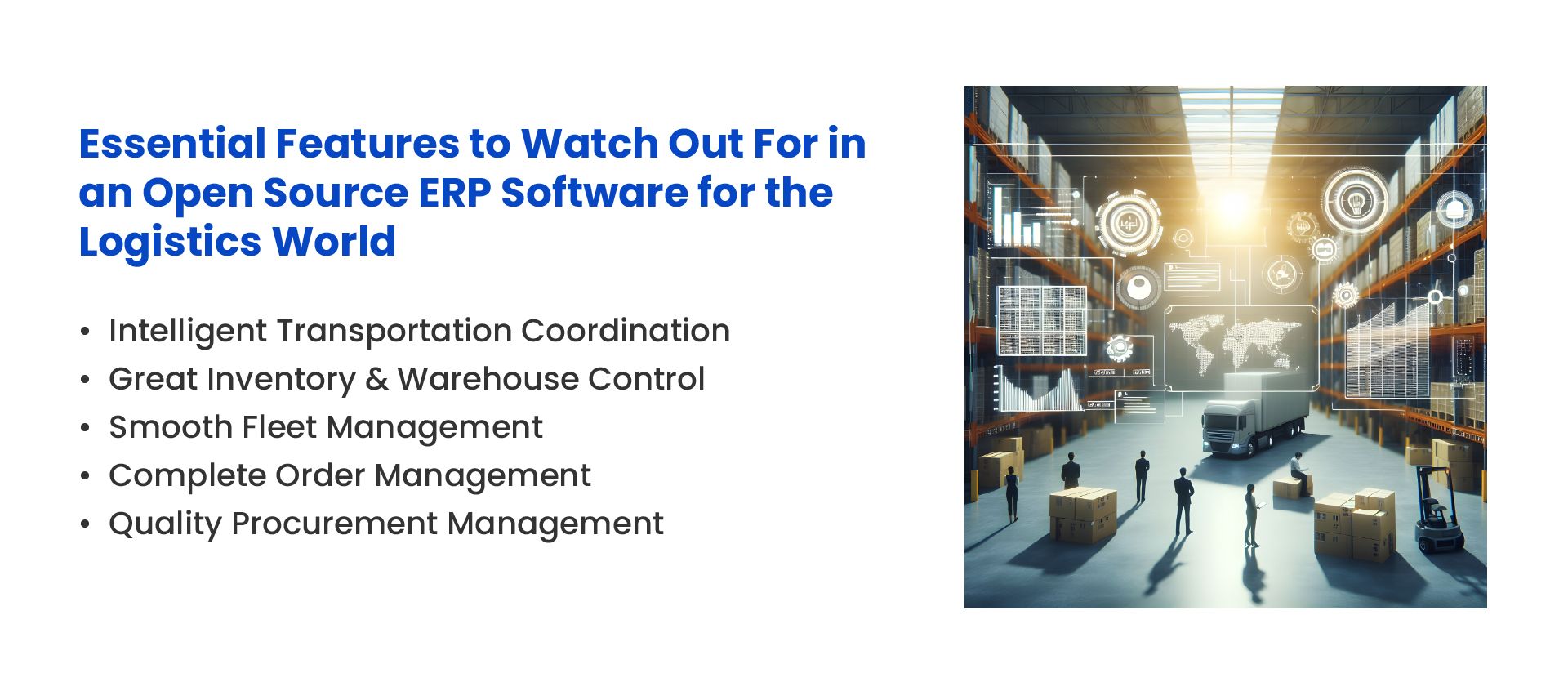
Important ERP Capabilities for Logistics Companies
Customer and Contract Management
Logistics companies often work with different pricing structures, service commitments, credit terms, operating locations, and billing rules for each customer.
An ERP platform should maintain customer information alongside:
- Service agreements
- Rate cards
- Payment terms
- Credit limits
- Required documents
- Account-specific workflows
This information can support consistent order processing and billing while reducing dependence on separate spreadsheets or employee knowledge.
Order and Service Management
The system should provide a reliable record of customer requests, service types, operational status, charges, and completion details.
Depending on the business model, an order may represent a warehouse service, transportation movement, freight forwarding job, delivery request, fulfillment order, or combined logistics service.
The ERP should allow these orders to move through defined stages and exchange data with the systems responsible for operational execution.
Inventory and Warehouse Integration
Some logistics businesses manage inventory directly within an ERP. Others use a dedicated warehouse management system integrated with the ERP.
The appropriate model depends on warehouse complexity. Basic storage and inventory requirements may be handled inside the ERP, while multi-client fulfillment, directed picking, advanced replenishment, cartonization, wave planning, and handheld workflows usually require specialized warehouse functionality.
When integrating an ERP and WMS, confirm how the systems will exchange:
- Customer and product records
- Inbound and outbound orders
- Inventory balances
- Receipt and shipment confirmations
- Adjustments and returns
- Billable warehouse activity
Transportation and Carrier Integration
An ERP may store shipment records and transportation costs, but advanced routing, freight rating, carrier tendering, and real-time tracking may be managed through a TMS or carrier platform.
Integration can allow the ERP to receive:
- Carrier assignments
- Tracking numbers
- Shipment milestones
- Freight charges
- Delivery confirmation
- Transportation exceptions
This information can then support customer communication, billing, financial analysis, and service-performance reporting.
Procurement and Supplier Management
Logistics companies purchase packaging materials, transportation services, equipment, maintenance, temporary labor, technology, and other operational resources.
An ERP system can provide controlled purchasing workflows for requisitions, approvals, purchase orders, supplier records, invoices, and payment processing.
It can also help the business review supplier pricing, delivery performance, contract status, and purchasing history without combining reports from several departments.
Service Billing and Revenue Management
Billing is often one of the strongest reasons to connect logistics operations with an ERP system.
A logistics company may charge for storage, receiving, picking, packing, transportation, handling, returns, labeling, special projects, or account-specific services. These charges may be based on units, pallets, cartons, weight, distance, time, transactions, or fixed contractual rates.
A customized ERP can collect approved operational events from warehouse and transportation systems, apply the relevant customer rates, and prepare invoices for review.
This reduces manual billing work and makes it easier to trace each charge back to the activity that created it.
Finance and Cost Control
An ERP system connects operational activity with accounting and financial reporting. This helps logistics companies compare customer revenue against labor, carrier, storage, equipment, and handling costs.
Useful financial capabilities may include:
- Accounts receivable and payable
- General ledger
- Customer profitability reporting
- Cost allocation
- Budget tracking
- Multi-company accounting
- Multi-currency transactions
The objective is not merely to record revenue. The system should help the company understand which services, customers, and facilities are contributing to or reducing profitability.
Workflow and Approval Controls
Logistics operations involve decisions that may need formal approval, including supplier purchases, rate changes, customer credits, inventory adjustments, refunds, and exceptional service charges.
An open-source ERP framework can be adapted to reflect these approval rules and maintain a record of decisions, comments, users, and timestamps.
Reporting and Operational Visibility
ERP reporting should combine financial and operational data rather than duplicate dashboards already available in warehouse or transportation systems.
Relevant reports may include:
- Revenue and margin by customer
- Outstanding customer invoices
- Carrier costs by service or route
- Warehouse charges by account
- Supplier performance
- Order profitability
- Service exceptions affecting billing
API and Integration Support
Integration capability is essential because logistics companies rarely operate through one system.
The ERP should be able to exchange data with:
- Warehouse management platforms
- Transportation and carrier systems
- Ecommerce marketplaces
- Customer portals
- Shipping applications
- Financial institutions
- Legacy databases
Before implementation, define which application will own each data record. Without clear ownership, integrations can create conflicting customer, order, inventory, and financial information.
Why Logistics Companies Consider Open-Source ERP
Control Over Custom Workflows
Logistics business models vary widely. A freight forwarder, fulfillment provider, courier company, warehouse operator, and fleet business may all require different processes.
Open-source ERP platforms allow developers to create workflows around these differences instead of depending entirely on a vendor's standard product design.
Greater Integration Flexibility
Source-code access and adaptable APIs can make it easier to connect warehouse, transportation, ecommerce, accounting, and customer systems.
This flexibility is especially useful when the business operates legacy applications or customer-specific integrations that packaged ERP products do not support directly.
Reduced Dependence on One Vendor
An open-source platform can allow the business to work with different development partners, hosting providers, or internal teams.
This does not eliminate implementation dependency. Poor documentation or highly specialized custom code can still make switching partners difficult. Development standards and system documentation therefore remain important.
Long-Term Development Control
Logistics processes change as customers, carriers, facilities, pricing models, and regulations evolve. An open-source system gives the business more control over which features are developed and when changes are released.
Trade-Offs to Consider
Open-source ERP is not automatically the least expensive or simplest option.
Technical Resources
Framework-based ERP platforms generally require developers, business analysts, testers, and system administrators. Companies without internal technical resources will need an experienced implementation partner.
Implementation Responsibility
The organization must decide how hosting, updates, security patches, backups, monitoring, testing, and support will be managed.
Customization Risk
Custom development can provide a better process fit, but unnecessary customization increases maintenance and upgrade effort. Each custom feature should solve a documented business requirement.
Project Scope
Trying to replace ERP, WMS, TMS, customer portals, fleet tools, and reporting systems in one implementation creates unnecessary risk. A phased rollout is usually easier to test and manage.
Open-Source ERP Platforms for Logistics Development
Apache OFBiz
Apache OFBiz combines enterprise applications with an open-source development framework.
It includes components for accounting, order management, inventory, purchasing, manufacturing, ecommerce, customer management, and other business functions. Development teams can configure and extend these components around logistics workflows and system integrations.
Moqui Framework
Moqui Framework is an open-source enterprise application framework used to build ERP, accounting, ecommerce, warehouse, order management, and other business applications.
It is suitable for organizations that need a customized application architecture rather than a standard ERP installation. Moqui implementations require experienced technical resources and careful solution design.
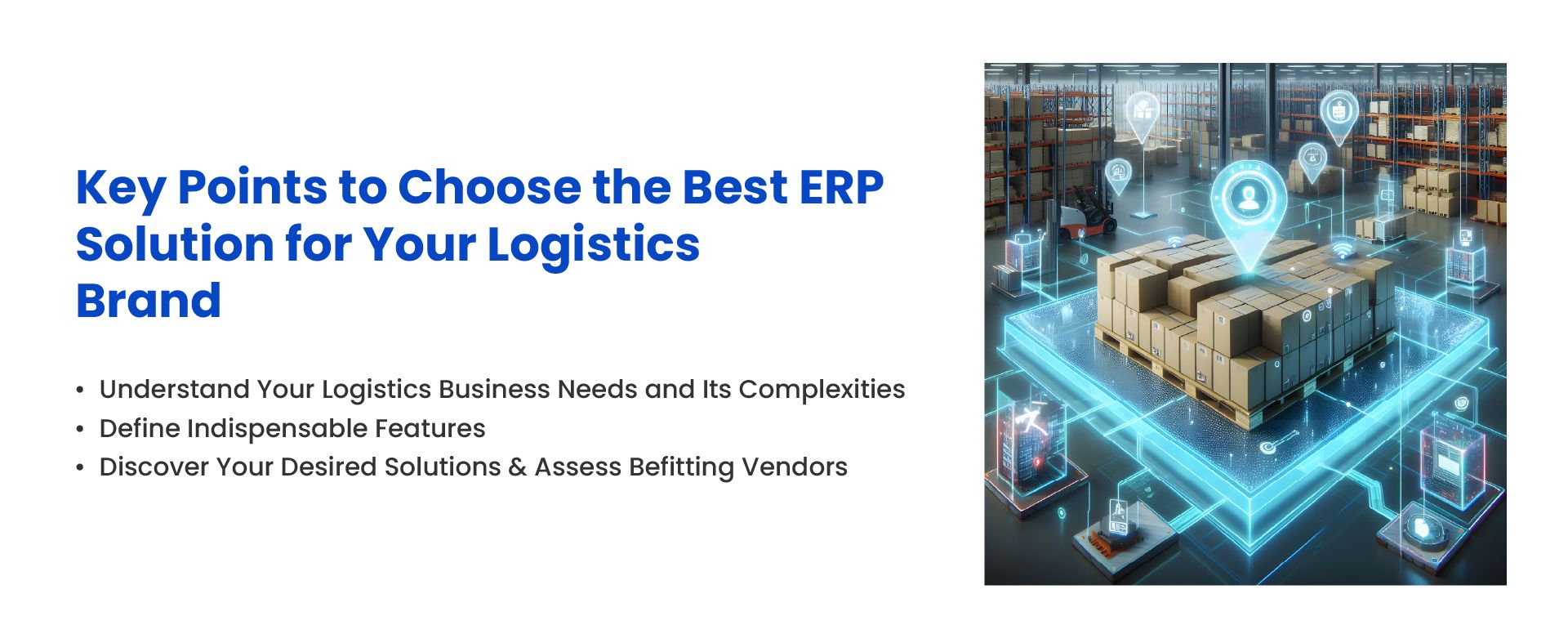
How to Choose an Open-Source ERP for Logistics
Define the ERP's Responsibility
Identify which processes will be handled by the ERP and which will remain in warehouse, transportation, fleet, ecommerce, or customer-facing systems.
Document Business Requirements
Map customer onboarding, order creation, operational handoffs, purchasing, billing, invoicing, and financial reporting.
Separate essential requirements from preferences. This prevents the project from accumulating custom features that provide little operational value.
Review Integration Requirements
Document every application that must exchange data with the ERP. Define the required records, update frequency, error handling, security, and ownership of each integration.
Evaluate Billing Complexity
Confirm whether the platform can support customer-specific rates, recurring fees, usage-based charges, minimum commitments, adjustments, taxes, and multi-currency billing.
Assess Technical Resources
Determine who will design, build, test, deploy, secure, and maintain the application. Review the implementation partner's experience with both ERP development and logistics workflows.
Calculate Total Ownership Cost
Include development, infrastructure, migration, integrations, training, support, maintenance, security, and future upgrades. Comparing licensing fees alone produces a wonderfully incomplete financial picture.
Use Operational Scenarios During Evaluation
Instead of reviewing generic demonstrations, ask vendors or implementation partners to show how the proposed system would handle real workflows, such as:
- Creating a new customer with a custom rate agreement
- Receiving billable warehouse activity from a WMS
- Reconciling carrier costs against customer charges
- Managing a disputed invoice
- Tracking profitability for a logistics account
- Updating an order after a service exception
Planning an Open-Source Logistics ERP Implementation
A practical implementation usually begins with the processes that create the greatest data or financial problems.
The project may be divided into phases:
- Customer, contract, and order data
- Procurement and supplier management
- Billing and accounting
- Warehouse and transportation integrations
- Reporting and workflow automation
Each phase should include data validation, user testing, security review, documentation, and training before it becomes part of daily operations.
Is Open-Source ERP Right for Your Logistics Business?
An open-source ERP platform may be appropriate when a logistics company needs deep customization, complex integrations, customer-specific billing, and long-term control over system development.
It may be less suitable when the company has standard requirements, limited technical resources, and no need for framework-level customization. In that situation, a packaged ERP product or a combination of specialized logistics systems may provide a simpler path.
The decision should be based on operational requirements, system responsibilities, technical resources, integration complexity, and long-term ownership costs.
Open-Source ERP Development for Logistics
NOI Technologies provides ERP consulting, development, customization, integration, migration, and support using open-source platforms such as Apache OFBiz and Moqui Framework.
Our team works with logistics, warehouse, ecommerce, and fulfillment businesses to connect operational systems with customer management, billing, accounting, procurement, and reporting workflows.