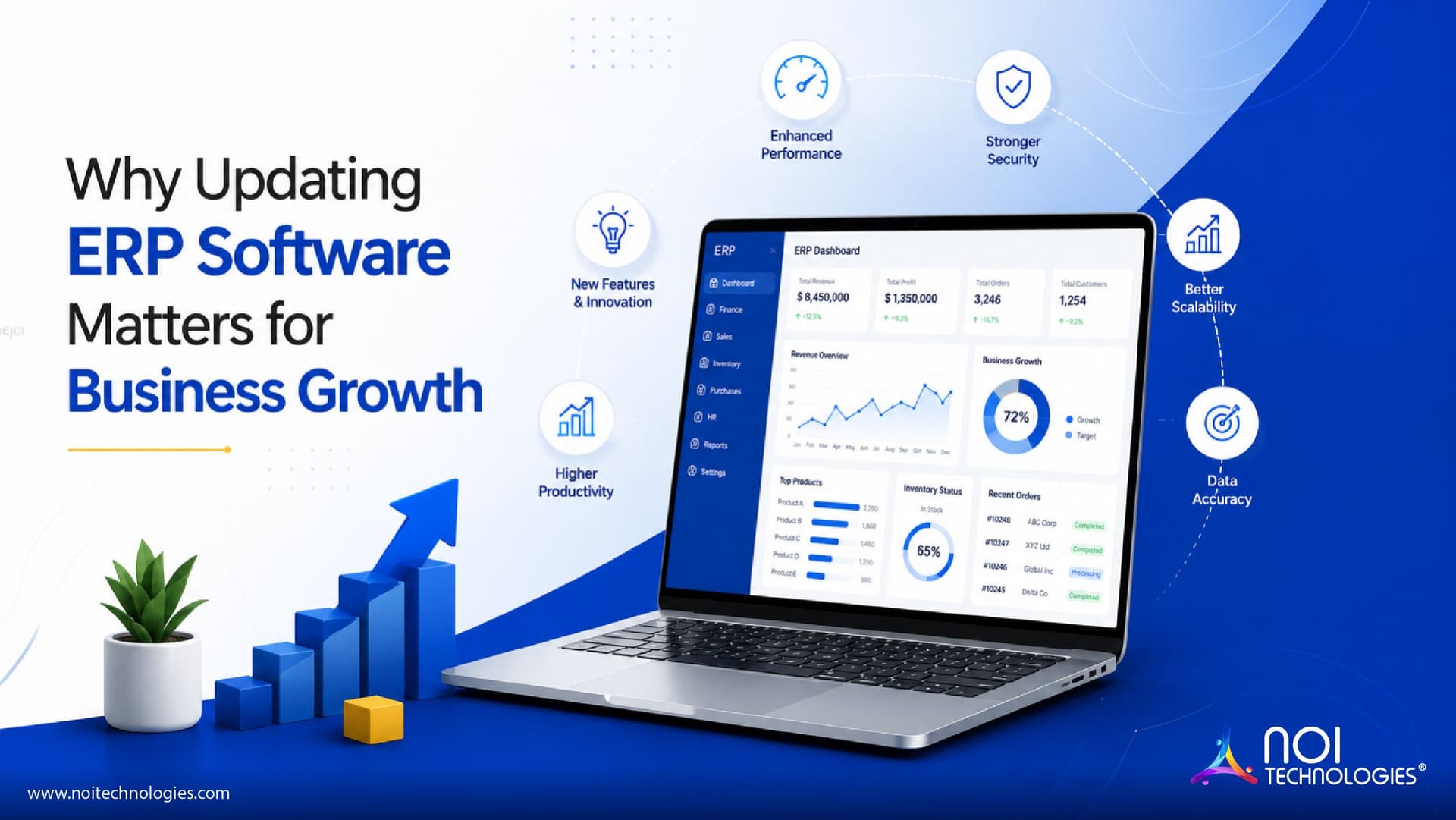
Updating ERP software helps businesses improve security, compliance, usability, reporting, automation, and operational efficiency. An outdated ERP system may still run daily processes, but it can quietly slow down growth, increase risk, and make business teams depend on manual work.
Enterprise resource planning software connects core business functions such as finance, inventory, procurement, reporting, accounting, sales, production, and operations in one system. When ERP software is updated regularly, businesses can use newer features, stronger security controls, better integrations, and improved workflows to support long-term growth.
For many companies, an ERP upgrade is not only a technical decision. It is also a business decision. The right ERP system update can help teams work faster, reduce errors, improve visibility, meet compliance requirements, and prepare the business for future technology changes.
Why Updating ERP Software Matters for Growing Businesses
Business processes change over time. Customer expectations, compliance rules, reporting needs, security risks, and technology standards also keep changing. If the ERP system does not evolve with those changes, teams may start relying on spreadsheets, manual approvals, disconnected tools, and repeated data entry.
ERP software upgrades help businesses keep their systems aligned with current operational needs. This can improve productivity, reduce technology risk, support better data access, and make the ERP platform more useful for daily decision-making.
Voluntary ERP Updates vs Forced ERP Updates
ERP updates usually happen for two reasons: voluntary improvement or forced change.
A voluntary ERP update is done when a business wants better performance, improved usability, new features, cleaner reporting, better integrations, or a more modern user experience. These updates are usually planned as part of a long-term ERP improvement strategy.
A forced ERP update happens when the business must respond to an external or urgent need. This may include compliance changes, tax updates, unsupported software versions, security vulnerabilities, system failures, technology upgrades, or changes in business structure.
Both types of ERP system upgrades are important. Voluntary updates help businesses improve before problems become serious. Forced updates help businesses stay compliant, secure, and operational when change becomes unavoidable.
Key Benefits of Updating ERP Software
Improves Business Efficiency
Outdated ERP systems often create slow approvals, duplicate work, reporting delays, and inconsistent processes. These issues affect productivity and make it harder for teams to complete important tasks on time.
An updated ERP system can improve workflow automation, reduce manual steps, and give teams faster access to accurate business data. This helps departments work with better coordination across finance, inventory, procurement, operations, and customer management.
Strengthens ERP Security and Risk Management
ERP systems store sensitive business data, including financial records, customer information, supplier details, pricing, inventory value, and operational reports. If the ERP platform is outdated, it may become more vulnerable to security risks, malware, unauthorized access, and system instability.
Regular ERP software updates help improve encryption, access control, security patches, audit trails, and system protection. This is especially important for businesses that handle confidential data, regulated processes, or multi-location operations.
Adds New Features That Improve Productivity
Modern ERP upgrades often include new features for reporting, dashboards, automation, approval flows, document management, inventory control, order tracking, accounting, and business analytics.
These features help employees complete work faster and make better decisions. For example, improved dashboards can give managers clearer visibility into sales, inventory, cash flow, procurement, and production performance without waiting for manual reports.
Helps the ERP System Evolve with the Business
As businesses grow, their ERP requirements also change. A system that worked for a small team may not support new warehouses, new product lines, new compliance rules, additional sales channels, or more complex reporting needs.
Updating ERP software helps the system keep pace with organizational change. It allows businesses to add new workflows, improve existing processes, and support future expansion without replacing the entire system too early.
Reduces Long-Term Technology and Maintenance Costs
Older ERP platforms can become expensive to maintain. They may require outdated infrastructure, custom patches, manual support, and special training for old workflows. Over time, this can increase cost and reduce flexibility.
Modern ERP technology, including open-source ERP frameworks and cloud-ready platforms, can reduce maintenance pressure and make customization easier. Frameworks such as Moqui and Apache OFBiz can support flexible ERP development for businesses that need custom workflows instead of rigid off-the-shelf software.
Supports Compliance, Tax, and Regulatory Changes
Compliance requirements change regularly. Tax rules, accounting standards, reporting formats, audit requirements, and industry regulations may require updates inside the ERP system.
An outdated ERP system may not support new compliance needs properly. ERP software updates help businesses keep forms, calculations, reports, approval flows, and data handling processes aligned with current regulatory requirements.
Improves Change Management Across the Organization
ERP upgrades can support organizational change by helping teams adapt to new structures, approval flows, reporting requirements, and business processes.
When a company adds departments, locations, warehouses, product categories, or service lines, the ERP system should support those changes. A planned ERP upgrade can help reduce disruption and make the transition easier for users.
Makes the ERP System Mobile-Friendly and Cloud-Ready
Modern businesses need access to data from different locations, devices, and teams. A mobile-friendly and cloud-ready ERP system can help employees access key information securely, whether they are working from the office, warehouse, production floor, or remote location.
Cloud-ready ERP infrastructure can also improve backup, availability, scalability, and disaster recovery. This helps protect business data and supports smoother operations as the company grows.
When Should a Business Update Its ERP Software?
A business should consider updating its ERP software when the system starts creating delays, security risks, reporting gaps, integration issues, or user frustration.
Common signs that an ERP update may be needed include:
- Teams rely heavily on spreadsheets outside the ERP system.
- Reports take too long to prepare or require manual cleanup.
- The ERP does not integrate well with ecommerce, warehouse, CRM, or accounting tools.
- Users complain about slow performance or difficult workflows.
- The system lacks modern security updates or access controls.
- The ERP vendor no longer supports the current version.
- Compliance, tax, or reporting requirements have changed.
- The business has added new locations, warehouses, products, or sales channels.
How to Plan an ERP Software Upgrade
An ERP upgrade should be planned around business goals, not only technical requirements. Before updating the system, businesses should review current pain points, user needs, compliance gaps, integration requirements, reporting issues, and future growth plans.
A practical ERP upgrade strategy should include:
- Reviewing current ERP limitations and business process gaps
- Identifying which features, modules, or integrations need improvement
- Cleaning and validating business data before migration or update
- Testing workflows before full rollout
- Training users on new features and process changes
- Planning backup, security, and rollback options
- Monitoring performance after the upgrade
This approach helps reduce disruption and makes sure the ERP system update delivers real business value instead of becoming another software project that everyone quietly resents.
Custom ERP Upgrade and Modernization Support
Some businesses do not need a full ERP replacement. They may only need ERP modernization, workflow improvements, API integrations, reporting upgrades, security updates, or module-level enhancements.
Custom ERP solutions can help businesses update specific parts of their ERP environment while keeping important existing workflows in place. This is useful for companies using legacy ERP systems, open-source ERP platforms, custom business software, or industry-specific ERP setups.
For businesses that need technical guidance, ERP consulting services can help evaluate whether the company should upgrade, customize, integrate, modernize, or replace its current ERP system.
Final Thoughts
Updating ERP software helps businesses stay secure, compliant, efficient, and ready for growth. An outdated ERP system may still support basic operations, but it can also limit productivity, increase manual work, and create unnecessary risk.
A successful ERP software upgrade should focus on business outcomes such as better reporting, stronger security, smoother workflows, improved integrations, and easier user adoption.
Whether the goal is ERP modernization, system integration, cloud readiness, compliance support, or custom ERP development, the upgrade should be planned carefully around real business needs.
Need Help Upgrading Your ERP System?
NOI Technologies can help you assess, modernize, customize, or integrate your ERP software based on your business workflows.