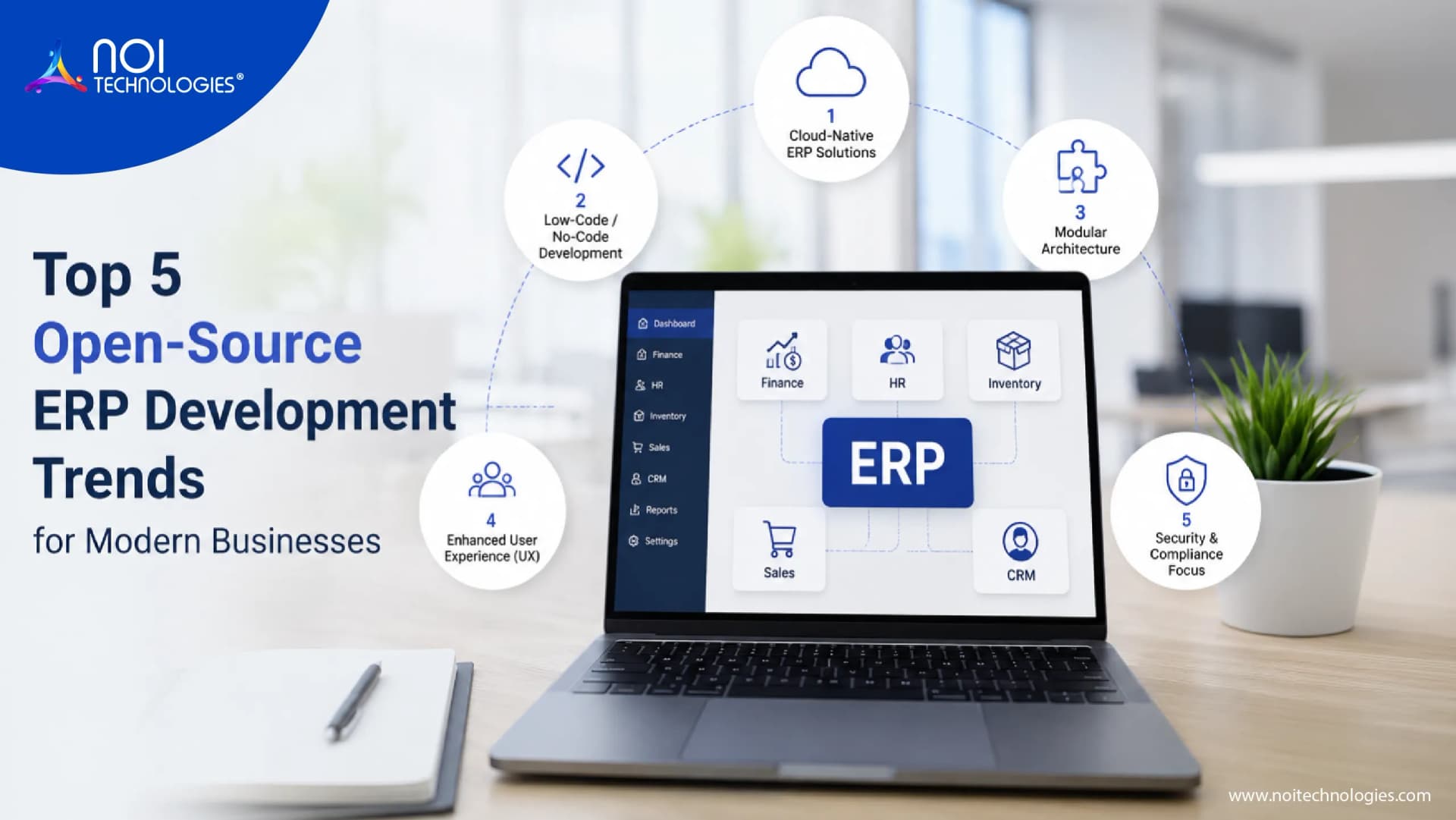
Enterprise resource planning systems help businesses manage finance, inventory, procurement, sales, supply chain, manufacturing, logistics, reporting, and other core operations from one connected platform.
As business processes become more complex, companies need ERP systems that are flexible, scalable, secure, and easier to integrate with other tools. This is one reason more businesses are considering open-source ERP development instead of relying only on rigid proprietary software.
Open-source ERP development gives businesses more control over customization, system architecture, integrations, and long-term software ownership. When planned correctly, it can help companies build ERP solutions around their actual workflows instead of forcing teams to work around software limitations.
This article explains what open-source ERP development is, why businesses choose it, and the top ERP development trends shaping modern enterprise software.
What Is Open-Source ERP Development?
Open-source ERP development is the process of building or customizing ERP software using platforms or frameworks where the source code can be accessed, reviewed, modified, and extended.
An open-source ERP system helps businesses manage core operations such as finance, inventory, sales, procurement, customer management, manufacturing, warehouse operations, supply chain, and reporting.
The main advantage is flexibility. Businesses can customize modules, create new workflows, connect third-party systems, and adapt the ERP as operations change.
Common open-source ERP platforms and frameworks include open-source ERP frameworks such as Moqui Framework, Apache OFBiz, Dolibarr, ERPNext, Metasfresh, and Tryton.
Benefits of Open-Source ERP Development
Open-source ERP development can support businesses that need more control, customization, and integration flexibility than standard ERP software provides.
Some of the main benefits include:
- Lower licensing dependency: Open-source ERP can reduce reliance on expensive software licenses, although implementation, hosting, support, and customization still require proper investment.
- More customization: Businesses can modify workflows, modules, dashboards, and integrations based on specific operational needs.
- Better system ownership: Companies have more control over how the ERP is developed, extended, and maintained.
- Community and partner support: Many open-source ERP frameworks are supported by developer communities and implementation partners.
- Scalability: Open-source ERP systems can be adapted as the business adds users, locations, products, channels, or departments.
Top 5 Open-Source ERP Development Trends
ERP development is moving toward systems that are more connected, cloud-ready, data-driven, secure, and easier for teams to use. Businesses planning an ERP project should consider these trends before choosing a platform or development approach.
1. Cloud-First ERP Architecture
Cloud-first ERP architecture is becoming a standard approach for businesses that need accessibility, scalability, and easier system maintenance.
A cloud-first ERP system allows teams to access business data and workflows from different locations, which is useful for companies with distributed teams, multiple branches, remote users, or multi-location operations.
Cloud ERP can also support faster deployment, easier updates, backup planning, and integration with other cloud-based business tools. For businesses comparing deployment models, understanding the difference between cloud ERP and on-premise ERP is important before making a decision.
For open-source ERP development, cloud-ready architecture helps businesses build systems that can scale without depending heavily on fixed infrastructure.
2. Advanced Analytics and Real-Time Business Data
ERP systems are no longer used only for recording transactions. Businesses now expect ERP software to provide real-time visibility into sales, finance, inventory, procurement, production, supply chain, and customer activity.
Advanced analytics helps teams understand performance trends, identify operational issues, track demand patterns, and make better decisions using business data.
For example, real-time ERP dashboards can help managers monitor stock movement, order status, purchase requirements, production delays, cash flow, and customer demand from one system.
In open-source ERP development, analytics and reporting can be customized around the metrics that matter most to the business instead of relying only on standard reports.
3. Improved User Experience and Mobile Accessibility
User experience is becoming a major ERP development priority. Even a powerful ERP system can fail if teams find it difficult to use.
Modern ERP systems need clear dashboards, simple navigation, role-based access, mobile-friendly screens, and workflows that match how employees actually work.
Mobile accessibility is especially important for field teams, warehouse staff, sales teams, managers, and employees who need access to business data outside a fixed office setup.
In open-source ERP development, user interfaces can be customized for different roles, departments, and operational workflows. This helps reduce training friction and improves daily system adoption.
4. Stronger Data Privacy and Cybersecurity
ERP systems store sensitive business information, including financial records, employee data, customer details, supplier information, inventory data, contracts, and operational reports. This makes cybersecurity a core part of ERP development.
Modern ERP systems need strong access controls, authentication, role-based permissions, audit trails, secure hosting, encryption, backup processes, and regular security updates.
Open-source ERP development gives technical teams more visibility into the system architecture and codebase. However, security still depends on proper implementation, maintenance, infrastructure, and governance.
Businesses should also consider compliance requirements related to data protection, finance, user privacy, and industry-specific regulations when planning an ERP system.
5. Custom ERP Modules for Industry-Specific Workflows
More businesses are moving away from one-size-fits-all ERP systems. Different industries need different workflows, reports, integrations, and controls.
For example, manufacturing companies may need production planning, BOM, quality control, and shop floor workflows. Logistics companies may need warehouse, carrier, order routing, and fulfillment visibility. Retail and ecommerce companies may need marketplace integrations, inventory synchronization, returns management, and customer order tracking.
Open-source ERP development supports this need by allowing businesses to build custom ERP modules around specific operational requirements.
This makes open-source ERP a strong fit for businesses that need ERP systems for manufacturing, logistics, supply chain, retail, ecommerce, healthcare, services, or other specialized workflows.
Why These ERP Development Trends Matter
ERP trends matter because they reflect how businesses are changing. Companies need systems that can handle more data, more integrations, more users, and more complex operations.
A well-planned open-source ERP system can help businesses improve visibility, reduce manual work, connect departments, and adapt faster when processes change.
Instead of treating ERP as only a back-office system, businesses can use it as a central operating platform for finance, operations, customers, supply chain, and reporting.
Conclusion
Open-source ERP development is becoming more important for businesses that need flexible, scalable, and customizable enterprise software.
The main trends shaping ERP development include cloud-first architecture, real-time analytics, better user experience, stronger cybersecurity, and custom modules for industry-specific workflows.
For companies with complex operations, these trends can help guide better ERP planning and implementation decisions.
NOI Technologies helps businesses plan, customize, integrate, and support ERP systems using open-source ERP frameworks such as Moqui Framework and Apache OFBiz.
Need Help With Open-Source ERP Development?
Talk to NOI Technologies about building an ERP system that supports your workflows, integrations, and long-term growth plans.